There has been a lot of buzz lately about specialization in small-to-mid-sized HVAC and plumbing shops. The bigger players in the marketplace can do it all. Should smaller shops compete at that level or try to be known as the best in one particular aspect of the trade?
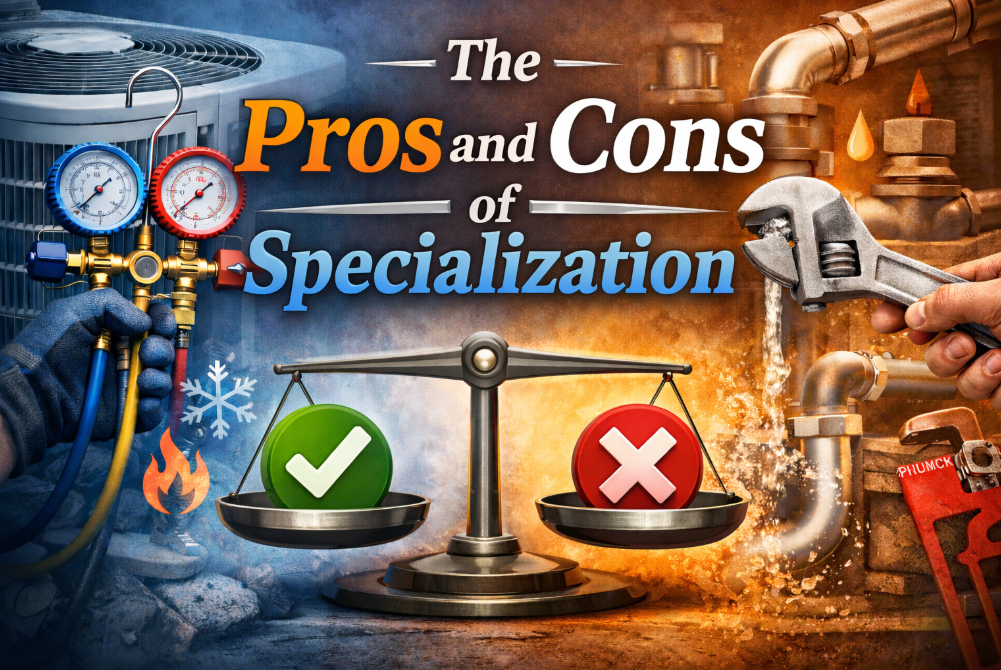
Here’s a rundown of the pros and cons of specialization for you to consider before deciding to go that route with your business.
Strong brand positioning…
Specialization means you’ll become known as the expert in whatever it is. Heat pumps. High-end boiler systems. Drain cleaning. IAQ solutions. You’ll become the go-to for customers who need what you’re providing.
… and more targeted marketing
Along with strong brand positioning comes simpler and more targeted marketing, using the name of your specialty. You’re the “Main Drain Authority” or the “Heat Pump Experts.” It also gives you the opportunity to create videos for YouTube or social media on your specialty, further cementing your expertise. It’s a powerful way to highlight and amplify who you are and what you do better than the competition.
Possibility of higher margins
There’s a perception that the expert can command a higher price tag than a generalist. You’ll bring uncommon expertise and knowledge to the job, so you’re bringing a higher value to the consumer.
Streamlined operations
If you’re doing one thing well, you don’t need equipment for everything. You can reduce the amount of stock you have on hand and train your people on one thing instead of the whole gamut of the industry.
Creation of tech experts
When your shop specializes, you are, in turn, offering your staff the opportunity to become experts in one niche of the industry. Enhanced training and certifications will help them gain technical knowledge, grow professionally, and climb the ladder. It’s a way to show employees that you care about helping them learn and grow.
Cons
Fewer opportunities for cross-selling and upselling
When you narrow your service options, you’re also narrowing your window of service options. You can’t upsell a customer on services different than the reason for the call when you’re not offering those services.
Ditto for yearly repeat business
A generalized shop typically has maintenance agreements with customers for yearly check-ups, which are like gold for a small business’s revenue stream. But if you’re just doing one thing — installing heat pumps, for example — there are fewer opportunities for those types of agreements.
Narrower customer base
Not everyone is going to need your specialized service, so your potential customer base is smaller than that of a generalized shop.
The “all eggs in one basket” risk
The HVAC and plumbing industries are subject to regulations, trends, technology changes and upgrades, governmental factors like incentives and tax credits, and a whole host of other factors. What if one or a combination of those leads to a shift away from your specialty? For the past year or so, heat pumps have been a hot commodity because of government incentives to install them. What about next year?
Bottom line: Is specialization a good idea?
If you already have strong demand in one niche of your market, you may want to amplify and highlight your expertise in it.
But, many shops are choosing a mixed approach, offering a wide array of general services while having techs on staff who are the “expert” in one thing.